Most business books are written for founders raising money or managers running departments. A few are different: they're about the daily work of a small business, keeping money straight, serving customers and not letting the business swallow your life. These are the ones worth a shopkeeper's evenings.
Below are seven of the best business books for beginners and small business owners, what each one actually teaches, and how its lesson looks at a shop counter. They're compared side by side at the end, so you can pick the one that fits the problem you have now.
1. The E-Myth Revisited, by Michael E. Gerber
The idea: Gerber says every business owner is three people in one. The entrepreneur dreams up where the business is going, the manager wants order and plans, and the technician does the work itself. In most small business owners he finds the split is roughly 10% entrepreneur, 20% manager and 70% technician.
Most small businesses begin with what he calls an "entrepreneurial seizure": a technician, good at the work, decides to go it alone, and then gets buried in that same work, now with the bills and staff on top. His answer is the franchise prototype: build the business as if you were going to copy it many times over. Write down how each job is done, so the shop runs on systems, not on you being there every minute. His best-known line sums it up: work on your business, not only in it.
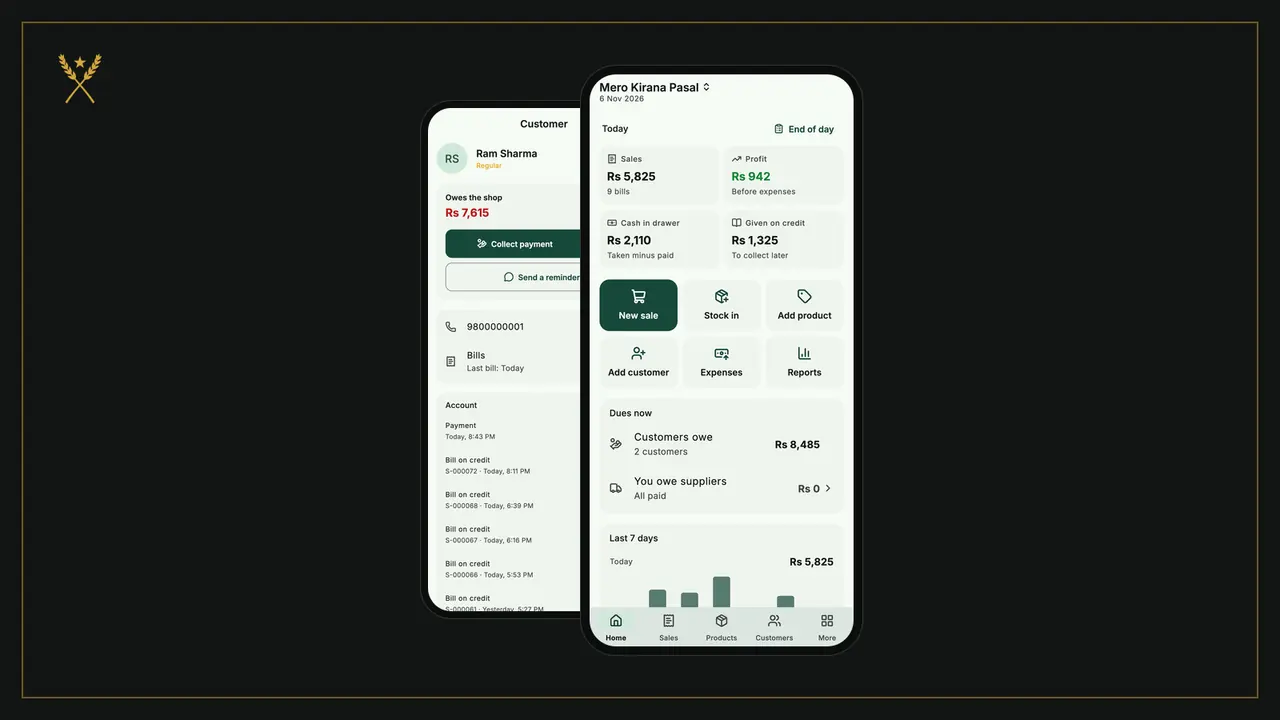
At the counter: write down how you open, how you receive a delivery, how you count the cash and how you close. When a family member or new staff member takes over for a day, nothing depends on memory. A billing app that records every sale and delivery is already part of such a system, and an hour a week away from the counter, looking at what sold and what didn't, is working on the business.
The book is an easy read, built around a conversation with a small business owner who is drowning in her own shop, which is why so many shopkeepers recognise themselves in it.
Best for: owners who can't take a day off.
2. Made in America, by Sam Walton with John Huey (1992)
The idea: Walmart's founder tells how he went from one variety store in a small Arkansas town to building one of the world's biggest retailers. The book is full of shopkeeping detail: buying cheaper so you can sell cheaper, walking competitors' stores to learn, listening to the people who work on the shop floor.
At the counter: visit other shops and note what they do well. Watch which items sell and buy those better. Small savings on items you sell every day add up to more than big margins on items that rarely sell.
Best for: anyone who runs a retail shop and wants to grow it.
3. Profit First, by Mike Michalowicz
The idea: instead of "sales minus expenses = profit", take your profit first, put it aside, and run the business on what's left. Separate pots of money for profit, the owner's pay, tax and running costs make overspending visible.
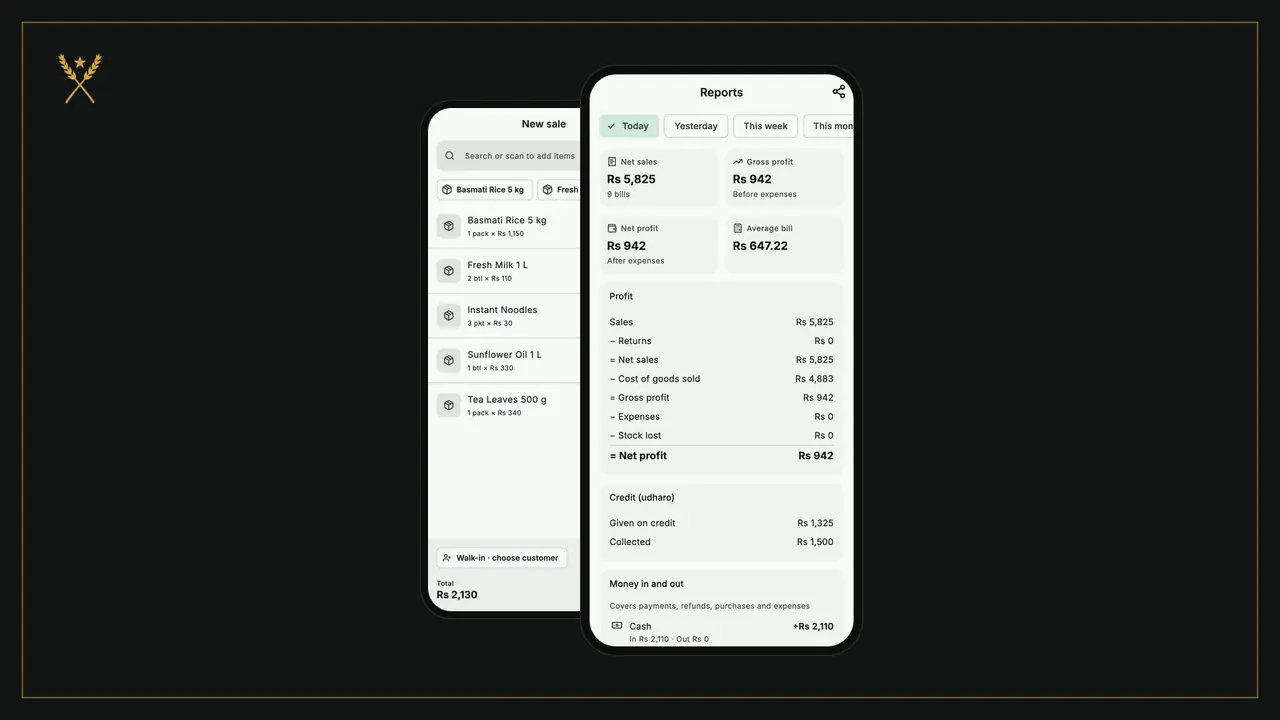
At the counter: keep the drawer money, the shop's savings and your family's money apart. Even a small fixed share set aside each week changes how you buy. Knowing your real daily profit, not just sales, is where it starts; see how to calculate your shop's real profit.
Best for: shops with good sales but no money left at the end of the month.
4. The Psychology of Money, by Morgan Housel
The idea: doing well with money is less about knowledge than behaviour: patience, avoiding ruin, and knowing when you have enough. Short chapters, each built around a story.
At the counter: a shop is a long game. Steady habits (record every sale, keep a cushion of cash, don't over-borrow for stock) beat clever moves.
Best for: anyone, and a good first book for someone who doesn't usually read business books.
5. Rich Dad Poor Dad, by Robert Kiyosaki
The idea: the difference between assets (things that put money in your pocket) and liabilities (things that take it out), told through two father figures. It's one of the best-selling money books ever written, and also one of the most criticised: much of its advice is general and some of its claims have been challenged, so read it for its way of thinking, not as instructions.
At the counter: is a new fridge, a second counter or a bigger stock an asset? Only if it earns more than it costs. Run the numbers before buying.
Best for: beginners who want to start thinking about money differently.
6. The Lean Startup, by Eric Ries
The idea: test small and learn fast. Instead of betting big on a plan, try the smallest version, measure what happens, and change course.
At the counter: before stocking a new product line, buy one carton, put it at eye level and see how it sells in two weeks. Try home delivery for three regular customers before promising it to everyone.
Best for: owners trying something new: a new product range, a second shop, delivery.
7. Atomic Habits, by James Clear
The idea: big results come from small habits repeated daily, made easier by changing your surroundings.
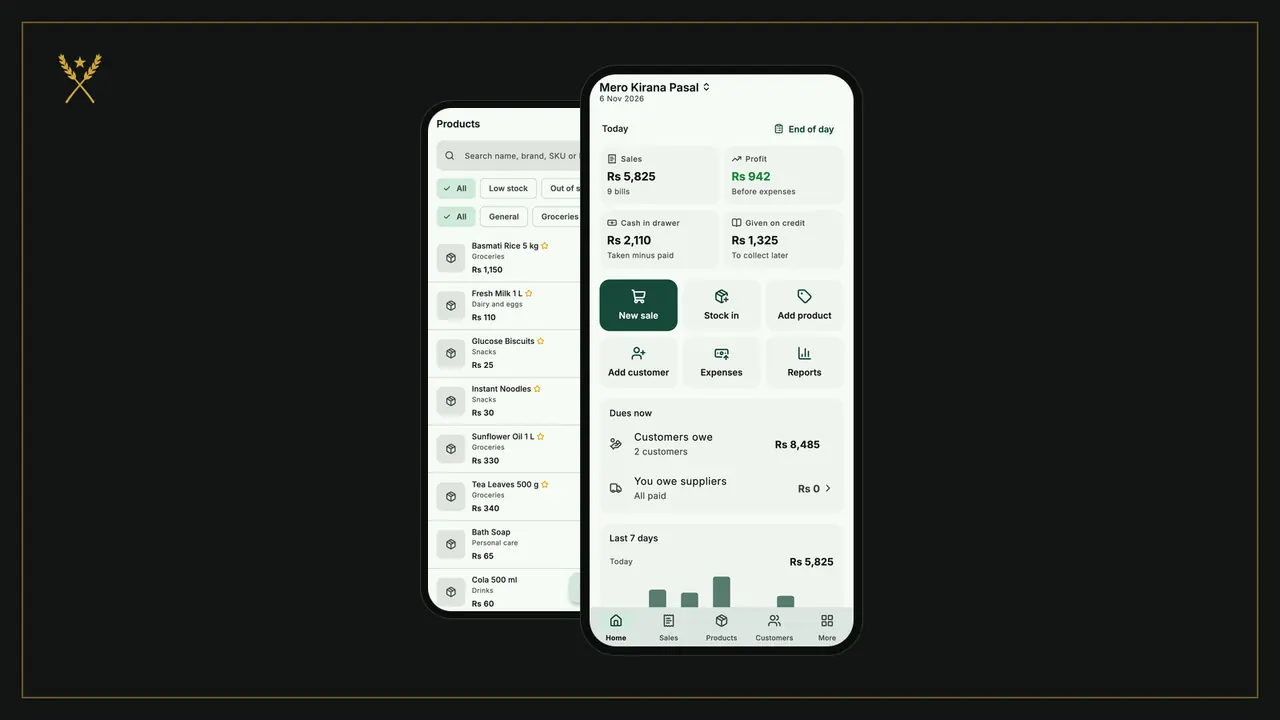
At the counter: make the right thing the easy thing. If the khata is on the phone you already hold, recording credit takes seconds. If the low-stock list builds itself, ordering on time doesn't depend on memory. Tools like BSMM, a free stock, billing and khata app, turn good shop habits into defaults.
Best for: anyone who knows what they should do but doesn't do it consistently.
The seven compared
| Book | Main lesson | Best when you… | Reading effort |
|---|---|---|---|
| The E-Myth Revisited | Build systems, not dependence on you | can't take a day off | Medium |
| Made in America | Buy well, sell cheap, learn from others | want to grow a retail shop | Medium (long) |
| Profit First | Take profit first, then spend | have sales but no savings | Easy |
| The Psychology of Money | Behaviour beats cleverness | are new to money books | Easy |
| Rich Dad Poor Dad | Assets versus liabilities | want a new way to think about money | Easy |
| The Lean Startup | Test small before betting big | are trying something new | Medium |
| Atomic Habits | Small daily habits compound | know what to do but don't do it | Easy |
Best business books for beginners: where to start
If you read only one, read The E-Myth Revisited if the shop depends on you for everything, or Profit First if money keeps disappearing. Then Made in America, which is the closest any famous business book gets to life behind a shop counter.
Reading helps only when the lesson turns into a habit. Pick one idea from the book you read, try it for a month, and check the numbers before and after. That last part is where a simple record of your sales, stock and udharo, in a notebook or an app, does the real work.
Questions shopkeepers ask
Are these books available in Nepali or Hindi? Hindi editions of Rich Dad Poor Dad and Atomic Habits are widely sold. In Nepali, an authorised edition of Rich Dad Poor Dad from the publisher Kathalaya was announced in November 2025. Unauthorised translations and pirated copies are common in Nepal and are often incomplete, so buy from a known bookshop.
Is Rich Dad Poor Dad worth reading for a shop owner? It's an easy read that makes you think about assets and spending, but treat it as a starting point, not a guide: much of its advice is broad, and parts of it have been criticised by financial writers.
Which book is most practical for a small retail shop? Made in America for retail thinking, and The E-Myth Revisited for running the shop without being trapped by it.
Related: lessons for shopkeepers from business tycoons and how to increase sales in a retail store.