Many people in Nepal start a business with modest savings, family help and a shutter on a busy street. The ideas that last are rarely the clever ones; they're the ones that meet a need people have every day, in a place with enough of those people.
This guide covers ten small business ideas in Nepal that need little capital, what each really involves, and the questions to ask before you start.
What makes a good small business idea in Nepal
Before choosing, check four things:
- Daily need: will people buy it every day or every week, not once a year?
- Location: are there enough homes, offices, schools or travellers nearby?
- Starting cost: rent deposit, fittings, first stock or equipment, and a few months of running costs.
- Your skill: do you, or someone in the family, already know the trade?
1. Kirana (grocery) shop
A kirana pasal sells the staples every household buys: rice, dal, oil, sugar, tea, noodles, soap. Demand is steady, the work is learnable, and a good location near homes almost guarantees footfall. Margins on staples are thin, so profit comes from volume, a good mix of better-margin goods, and careful buying.
Watch out for: credit (udharo) that isn't repaid, dead stock and expiry. See how to run a kirana store, managing udharo with a digital khata and inventory management for a small shop.
2. Stationery, photocopy and cyber
Near schools, colleges and offices, stationery, photocopying, printing and lamination sell all year, with peaks at the start of term and exam time. Many add online form filling, printing and scanning for people who don't have a computer. The photocopier and printer are the main costs.
Watch out for: seasonal ups and downs, and machine maintenance.
3. Mobile recharge, accessories and repair
Phone accessories, top-ups and simple repairs have steady demand in towns. Repair needs real skill; accessories need careful buying, because models change quickly.
Watch out for: stock that goes out of date when phone models change.
4. Tea shop, momo stall or small eatery
A clean tea shop with snacks, or a momo stall, near a bus park, office area or college can do well on small daily sales. It needs long hours and attention to hygiene.
Watch out for: food safety rules and wastage.
5. Fresh fruit and vegetables
Low starting cost, daily demand, and quick turnover. The challenge is waste: whatever doesn't sell in a day or two is lost.
Watch out for: spoilage. Buy small and often, and rotate stock.
6. Dairy shop or milk collection
Milk, curd, paneer and ghee are bought every day. A small dairy shop in a residential area, or a collection point that buys milk from local farmers and sells to a dairy, runs on steady daily volume.
Watch out for: refrigeration and power cuts, and quality checks on the milk you buy in.
7. Cosmetics and household goods
Better margins than staples, and goods that don't spoil quickly. Works well as an add-on to a grocery or as its own shop in a busy market.
Watch out for: fake goods from unreliable suppliers; buy from authorised distributors.
8. Tailoring and alterations
A sewing machine, skill and a small room are enough to start. School uniforms, alterations and festival clothes before Dashain and Tihar bring steady work.
Watch out for: the busy season's deadlines, and keeping track of customers' cloth and orders.
9. Poultry farming
A small broiler or egg-laying unit can start on family land near a town with demand for meat and eggs. It needs daily care and some training.
Watch out for: disease, feed prices and selling at the right time; talk to experienced farmers and the local livestock office first.
10. Online or WhatsApp-based selling
Home-made pickles, clothing, handicrafts or local products sold through social media and delivered locally. Very low starting cost, but you need good photos, fast replies and reliable delivery.
Watch out for: payment collection and returns; agree terms clearly.
Compare the ideas
| Idea | Starting cost | Daily demand | Margin | Main risk |
|---|---|---|---|---|
| Kirana shop | Medium | Very high | Thin to medium | Credit, expiry |
| Stationery, photocopy and cyber | Medium | High near schools | Medium | Seasons, machines |
| Mobile accessories and repair | Low to medium | High in towns | Medium | Outdated stock |
| Tea shop or momo stall | Low | High | Medium | Hygiene, long hours |
| Fruit and vegetables | Low | Very high | Medium | Spoilage |
| Dairy shop | Low to medium | Very high | Thin to medium | Spoilage, power cuts |
| Cosmetics and household | Medium | Medium | Better | Fake goods |
| Tailoring | Low | Seasonal peaks | Medium | Deadlines |
| Poultry | Medium | High near towns | Varies | Disease, feed prices |
| Online selling | Very low | Varies | Varies | Delivery, payments |
The first steps for any idea
- Check the location at different times of day for a week.
- Write a one-page plan: starting costs, monthly costs and the sales you need to break even. How to run a kirana store shows the break-even sum, and how to calculate your shop's real profit shows what to count once you're open.
- Register the business. Most small shops register at the ward office (byabasaya darta). Some register a private firm with the Department of Commerce, Supply and Consumer Protection or the Cottage and Small Industries office instead. Then get a PAN from the Inland Revenue office, and VAT registration once turnover passes the threshold. Ask your ward office which applies to you.
- Start small, learn what sells, then grow.
- Keep records from day one: sales, stock, credit and expenses.
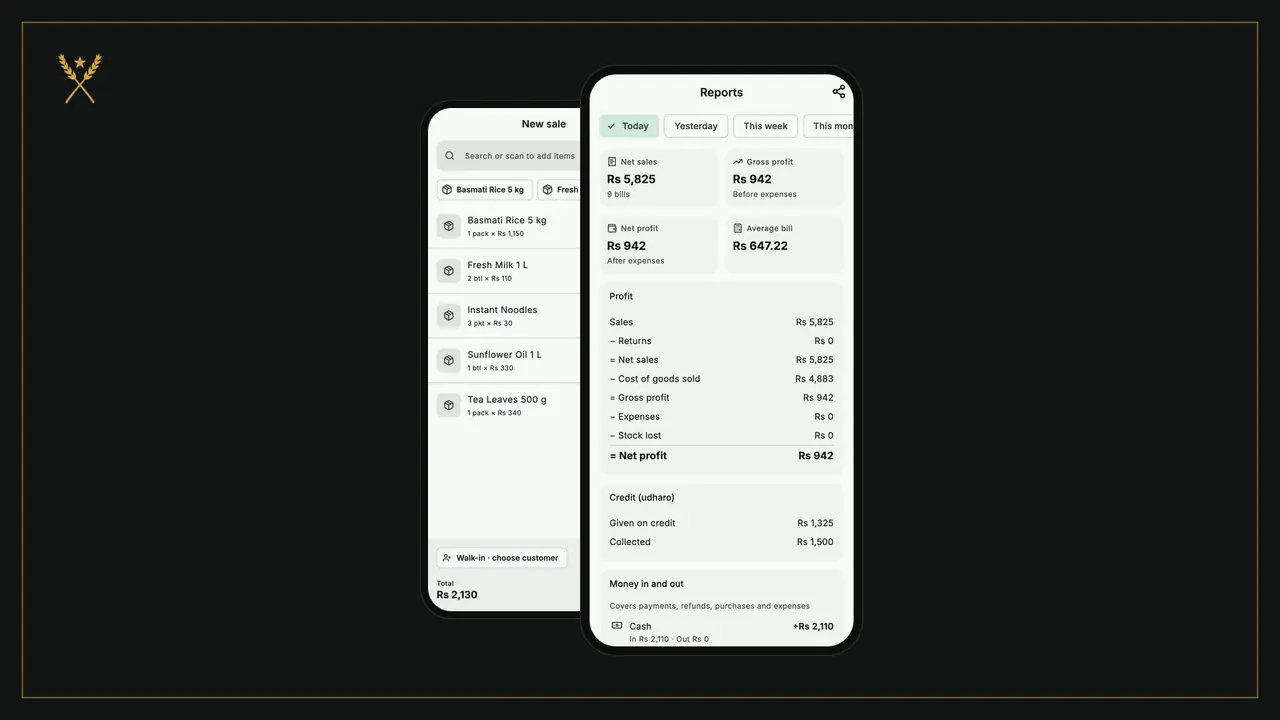
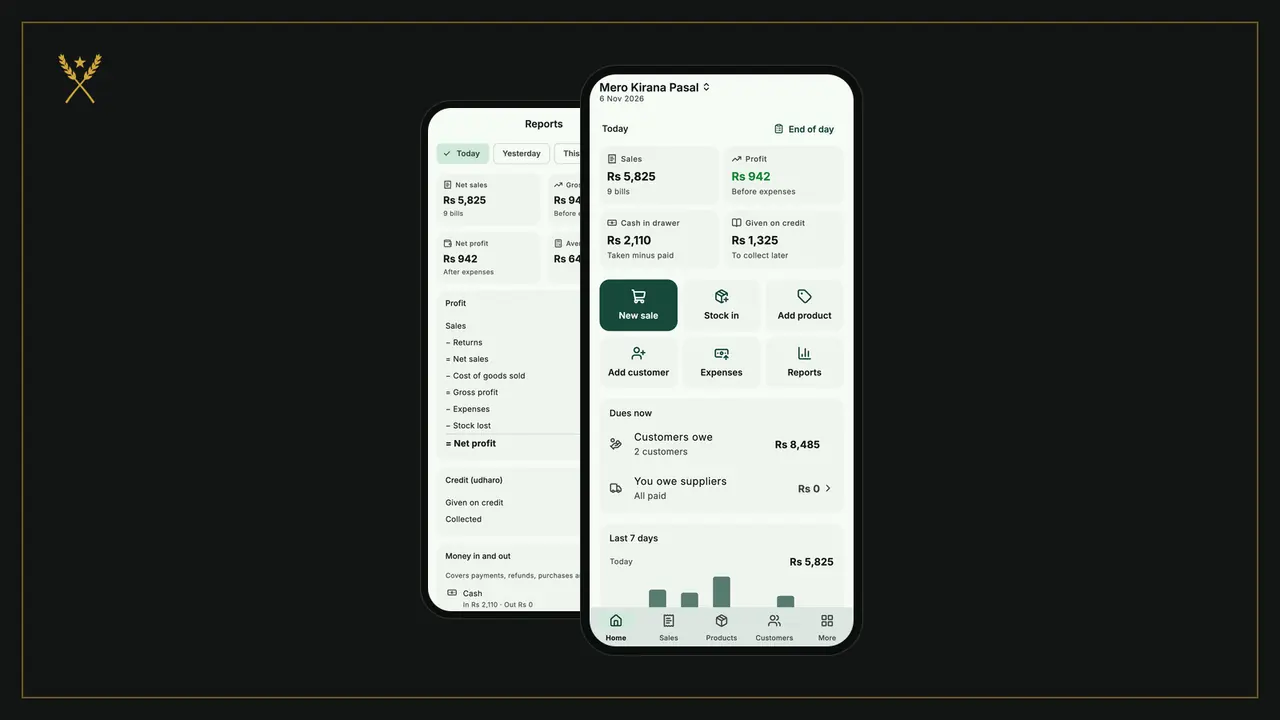
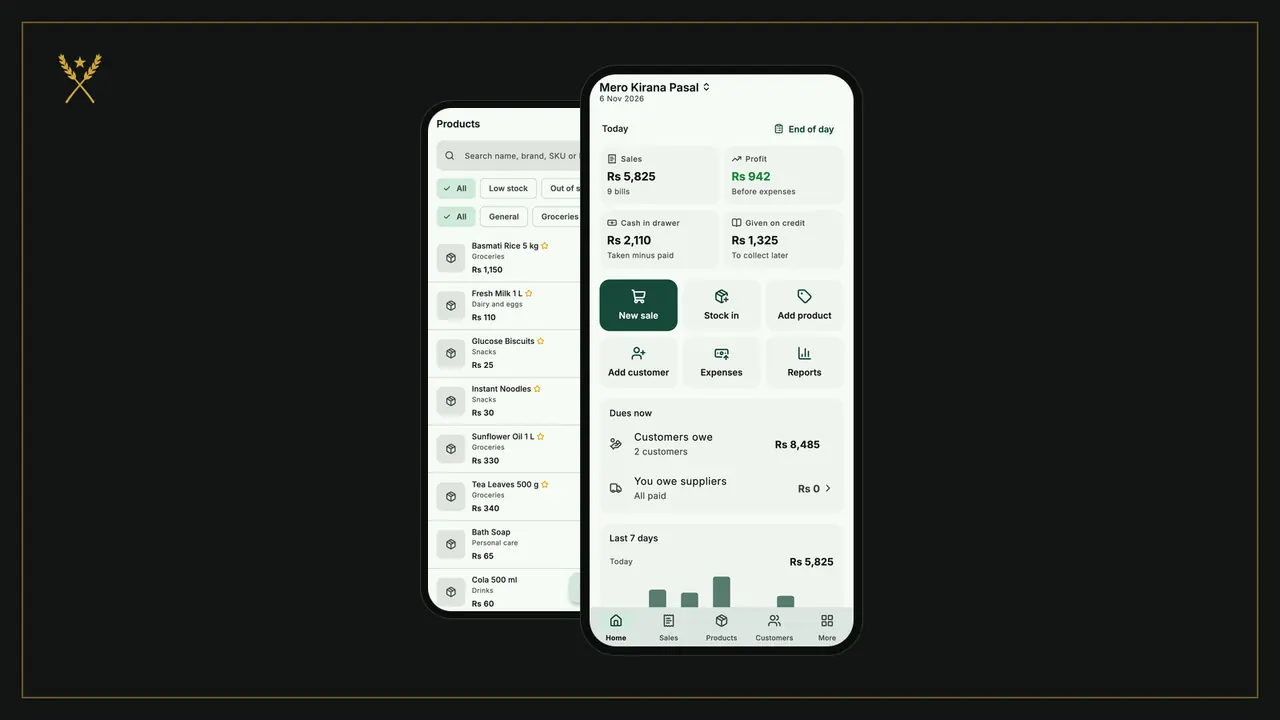
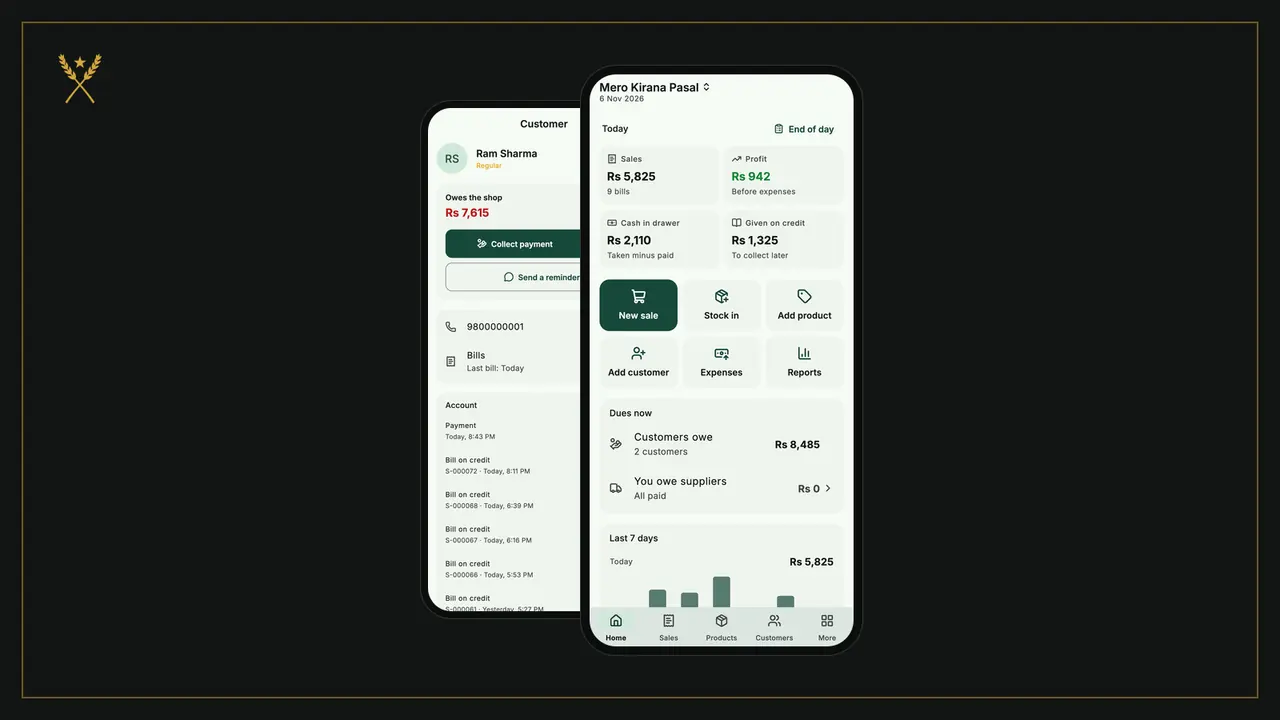
The last step is the one most new businesses skip, and the one that decides whether you know you're making money. A free app such as BSMM, made at a kirana in Pokhara, keeps those records on your phone for any shop that sells goods, from a one-person stall to a shop with staff and several branches, and works without the internet.
Questions shopkeepers ask
What is the most profitable small business in Nepal? There's no single answer: it depends on location, competition and your skill. A business that meets a daily need in a busy place, run with careful records, is the safest bet.
Which business can I start with little money in Nepal? Fruit and vegetables, a tea shop or momo stall, tailoring, mobile accessories or online selling need the least to start. A kirana shop needs more, mostly for its first stock.
Do I need to register a small shop in Nepal? Generally, yes. Most small shops register at the ward office; a private firm registers with the Department of Commerce, Supply and Consumer Protection or the Cottage and Small Industries office. You also need a PAN from the Inland Revenue office. Ask your ward office for the current requirements.
Related: business lessons from tycoons and how to increase sales in a retail store.