Some of the biggest business names in the world began behind a shop counter, or close to one. Their stories are usually told as tales of ambition, but read closely, they're full of lessons that apply to a single small shop on a Tuesday afternoon.
Here are four business tycoons, what they actually did early on, and the shopkeeper's lesson in each.
Sam Walton: buy well, sell for less
Sam Walton started with one Ben Franklin variety store in Newport, Arkansas, in 1945. After losing its lease in 1950 he moved to Bentonville, and by 1962, when he opened the first Walmart in Rogers, he and his brother Bud ran 16 stores. He told the story himself in Made in America (1992, with John Huey).
What stands out in his own account isn't size, it's habits:
- He hunted for better buying prices and passed the savings on. In the book he describes an item that cost him 80 cents: priced at $1.00 it sold about three times as many as at $1.20, so the lower price earned more in total.
- He visited competitors' stores constantly, looking for one idea to copy.
- He listened to the people on the shop floor, because they knew what customers asked for.
The shopkeeper's lesson: your buying price matters as much as your selling price. And walking into another shop with your eyes open costs nothing.
Dhirubhai Ambani: start small, think like a trader
Dhirubhai Ambani, founder of Reliance, worked in Aden (in today's Yemen) as a young man before returning to India in 1958. With his partner Champaklal Damani he began a small trading business, exporting spices and importing polyester yarn, then moved into textiles and built Reliance into one of India's largest companies.
- He started as a trader: buying where things were cheap and selling where they were needed, the same thing every shop does.
- He built a brand people asked for by name: Vimal, Reliance's own textile brand, rather than anonymous cloth.
- He grew step by step, reinvesting in the business he understood.
The shopkeeper's lesson: every big business starts with buying and selling well. Knowing which products your customers ask for by name, and keeping them in stock, is the trader's skill at shop size.
Ratan Tata: trust is the asset
Ratan Tata joined the family group in 1962 on the Tata Steel shop floor, led the Tata Group from 1991 to 2012, and died in October 2024. He was known as much for his reputation for fairness as for the group's growth, which included buying international brands such as Tetley and Jaguar Land Rover. One of his best-known projects, the Tata Nano, set out to make a car a family on a small income could afford; it didn't succeed commercially, and he spoke openly about why.
- He treated trust as the group's most valuable asset. Customers, staff and partners stayed because they believed the name.
- He thought about customers with little money, and was willing to try.
- He was honest about what didn't work.
The shopkeeper's lesson: a neighbourhood shop runs on trust: the right change, honest weights, a fair price and a khata that adds up. Customers who trust the shop come back for years.
Binod Chaudhary: from a family textile shop to Wai Wai
Binod Chaudhary, chairman of Nepal's Chaudhary Group, became the first Nepali to appear on the Forbes billionaires list, in 2013. The family business began two generations earlier: his grandfather, Bhuramal Das, came to Nepal from Rajasthan and started a textile business, and his father founded the Arun Emporium store in Kathmandu in 1968. The group is best known today for Wai Wai noodles, a Thai brand it began making in Nepal in 1984 and turned into one of the most familiar packets in a Nepali kirana.
- The family started in trading and retail, learning what customers bought and how goods moved.
- They backed a product for everyday buying: a cheap snack that people now choose by name.
- They mastered distribution, getting that product onto the shelves of small shops across the country.
The shopkeeper's lesson: the products that sell every day are the backbone of your shop, and the big brands depend on shops like yours to reach their customers. Treat your fastest sellers as the priority they are: never let them run out, and buy them on the best terms you can.
What the four have in common
| Started with | Key habit | Your version | |
|---|---|---|---|
| Sam Walton | One variety store (1945) | Buying cheaper, selling for less | Compare suppliers for your top items |
| Dhirubhai Ambani | A small trading business | Knowing what sells | Keep the products people ask for by name |
| Ratan Tata | The Tata Steel shop floor (1962) | Guarding trust | Honest prices, weights and records |
| Binod Chaudhary | A family textile business | Everyday products, wide distribution | Never run out of your fast sellers |
None of these lessons needs capital. They need attention, and attention needs good information: what sold, what ran out, what each item earned, who owes what.
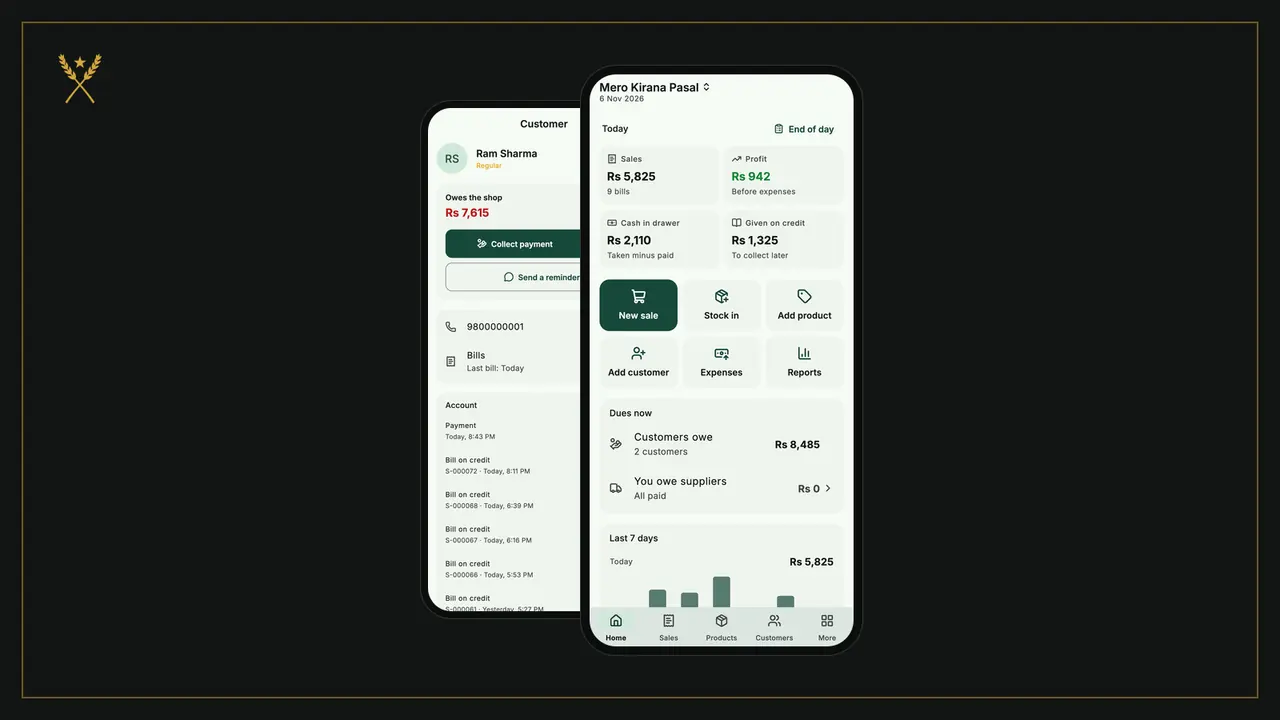
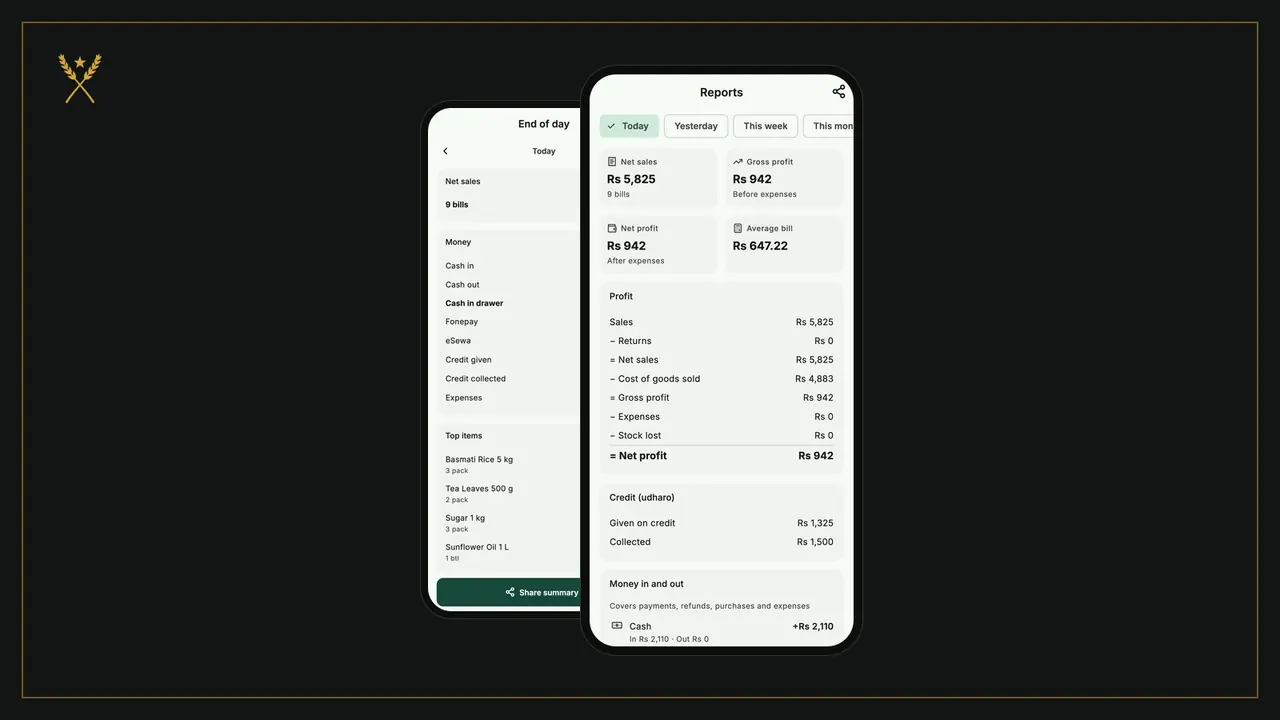
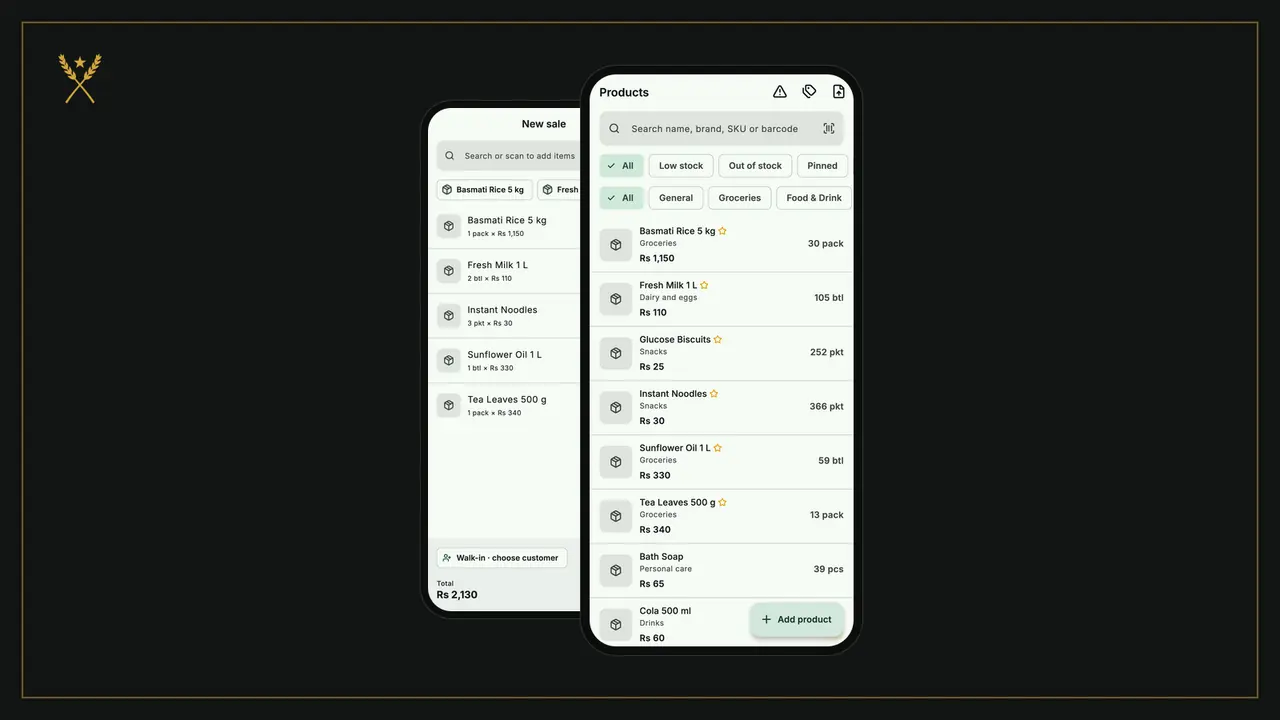
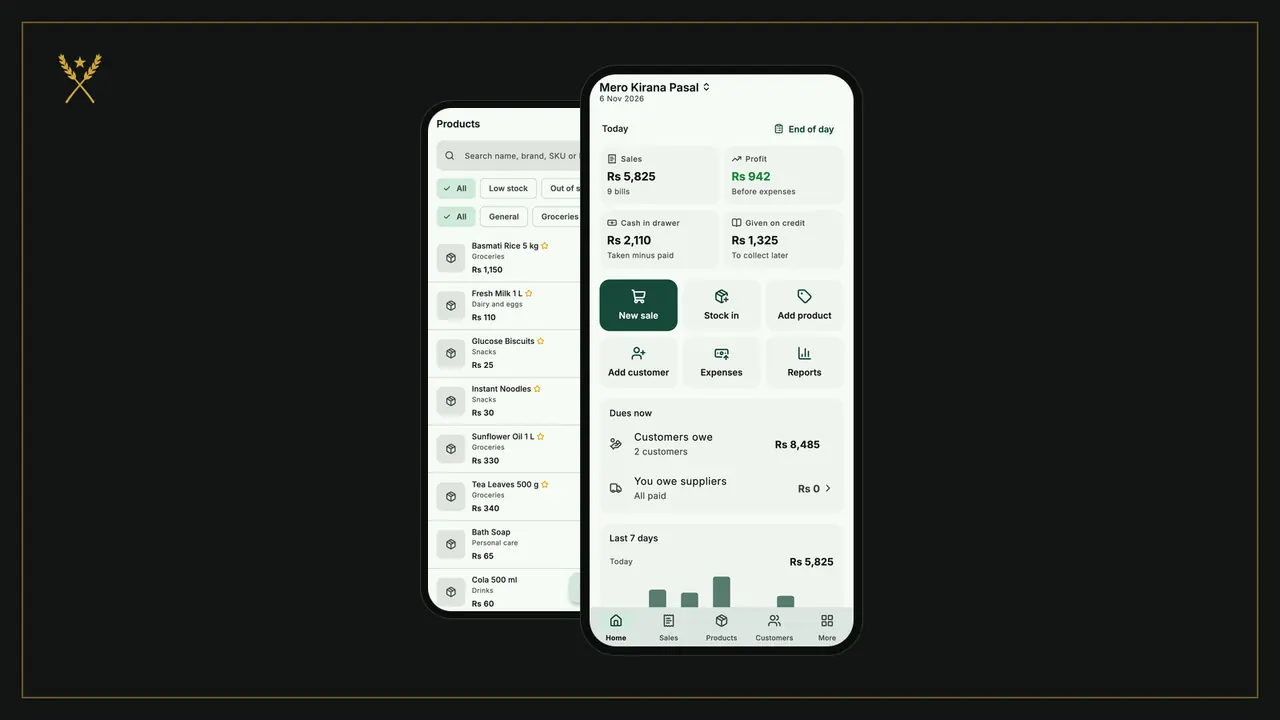
That's the gap between a shop that grows and one that stays where it is. A free app like BSMM, built at a family shop in Pokhara, keeps that information without extra work: sales by item, stock that warns you before it runs out, margins, and a khata that always adds up, for a one-person counter or a shop with several staff and branches.
Questions shopkeepers ask
Which business book tells a shopkeeper's story best? Sam Walton's Made in America. See more in business books for small business owners.
How did these tycoons start? Walton with one variety store in 1945, Ambani with a small spice and yarn trading business, and Chaudhary in a family textile and retail business. Tata started on the Tata Steel shop floor in 1962 and later led the group.
Can a small shop really use these lessons? Yes: buying well, knowing what sells, earning trust and never running out of fast sellers are all shop-sized habits.
Related: how to increase profit in a small shop.