More sales in a retail store come from three places: more customers walking in, each customer buying a little more, and each customer coming back more often. Advertising is only one way to get them, and usually not the cheapest. Most of what works for a small shop happens inside it, at the shelf and the counter.
Here are fifteen ways to increase sales in a retail store, grouped by those three levers, with what each costs and how to tell if it worked.
Lever 1: how to attract customers to your shop
1. Make the shop easy to see. A clean signboard you can read from across the road, the shutter up on time, and a lit front at dusk. Many passers-by decide in a second whether a shop is open and worth stopping at.
2. Put a reason to stop at the front. Seasonal goods, fresh fruit, a clearly marked offer. The front of the shop is your shop window, even without glass.
3. Be findable on maps. Customers search "grocery near me". A free business listing on Google Maps with correct hours, phone and photos is often the best advertising a neighbourhood shop can get. How to run a kirana store covers choosing a location in the first place.
4. Take orders by phone and WhatsApp. Some customers can't come every day. Letting regulars send a list for pickup or delivery turns them into customers you'd otherwise lose.
5. Accept every way your customers pay. Cash, cards and the QR payments people actually use (eSewa, Khalti, Fonepay, UPI). "Sorry, cash only" sends a customer to the next shop.
Lever 2: each customer buying more
6. Put everyday items at the back. Rice, oil and milk bring people in; making them walk past other shelves on the way is how supermarkets sell more snacks. In a counter-service shop, the same idea applies to the counter and the shelf behind you: keep what people might add within their sight while you serve them.
7. Place related goods together. Tea next to sugar and biscuits; noodles next to eggs. Customers buy what they're reminded of.
8. Keep fast sellers at eye level and never empty. An empty space where the best seller should be is a lost sale and a reason to try another shop. A reorder level for each fast mover prevents it; see reorder level and reorder point, and ABC analysis to find which items those are.
9. Suggest at the counter, politely. "Do you have sugar at home?" when someone buys tea is service, not pressure. One extra item on a third of bills is a big change in a month.
10. Bundle slow items with fast ones. A small discount on a pair moves stock and raises the bill. It's also the best cure for dead stock.
11. Price with care. Prices ending in 5 or 9, clear price labels and visible "value" sizes all change what people pick. Pricing strategy for a small shop covers how.
Lever 3: customers coming back more often
12. Know your regulars. Remember names and what they buy. A shop that keeps a regular's favourite brand in stock earns their loyalty.
13. Offer credit carefully. Udharo keeps families coming back, but only works with limits and a clear record. Managing udharo with a digital khata explains how.
14. Send a reason to return. A WhatsApp message when fresh stock arrives or before a festival, sent to customers who asked for it, works better than a printed flyer.
15. Fix the small annoyances. A slow counter, wrong change, a missing item every week. Each one quietly sends a customer elsewhere.
Measure before and after
Ideas only count if the numbers move. Track three figures weekly:
| Figure | How to get it | What it tells you |
|---|---|---|
| Number of bills | Count of sales per day | Lever 1: more people |
| Average bill | Sales ÷ number of bills | Lever 2: buying more |
| Repeat customers | Regulars who bought this week | Lever 3: coming back |
Try one idea at a time for two or three weeks and compare. If the average bill rises after you move the tea next to the sugar, keep it; if nothing changes, try the next idea.
Let the records do the counting
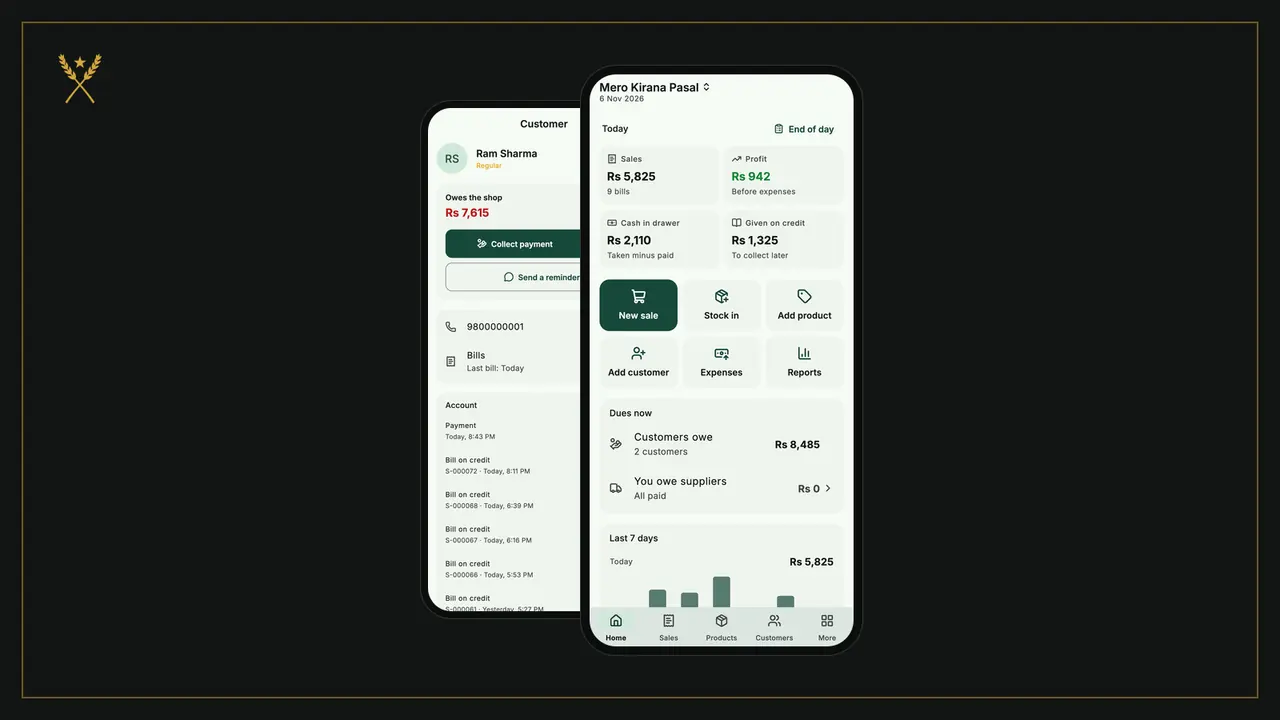
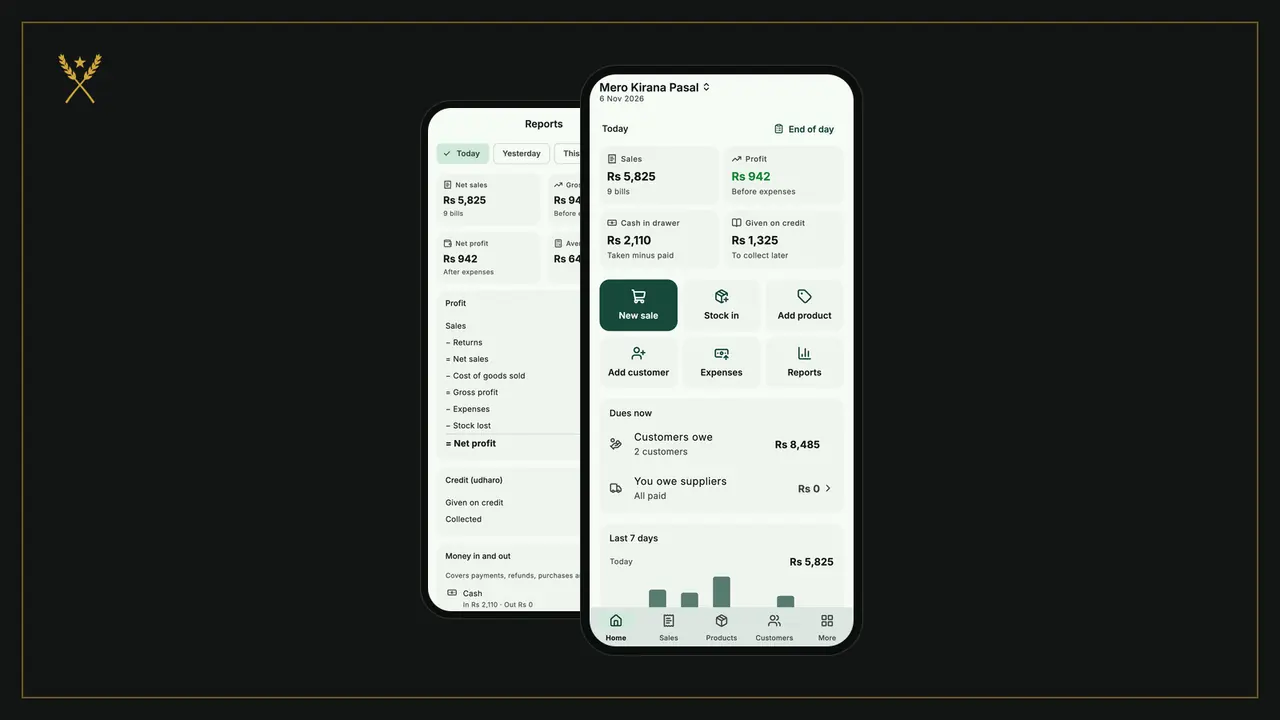
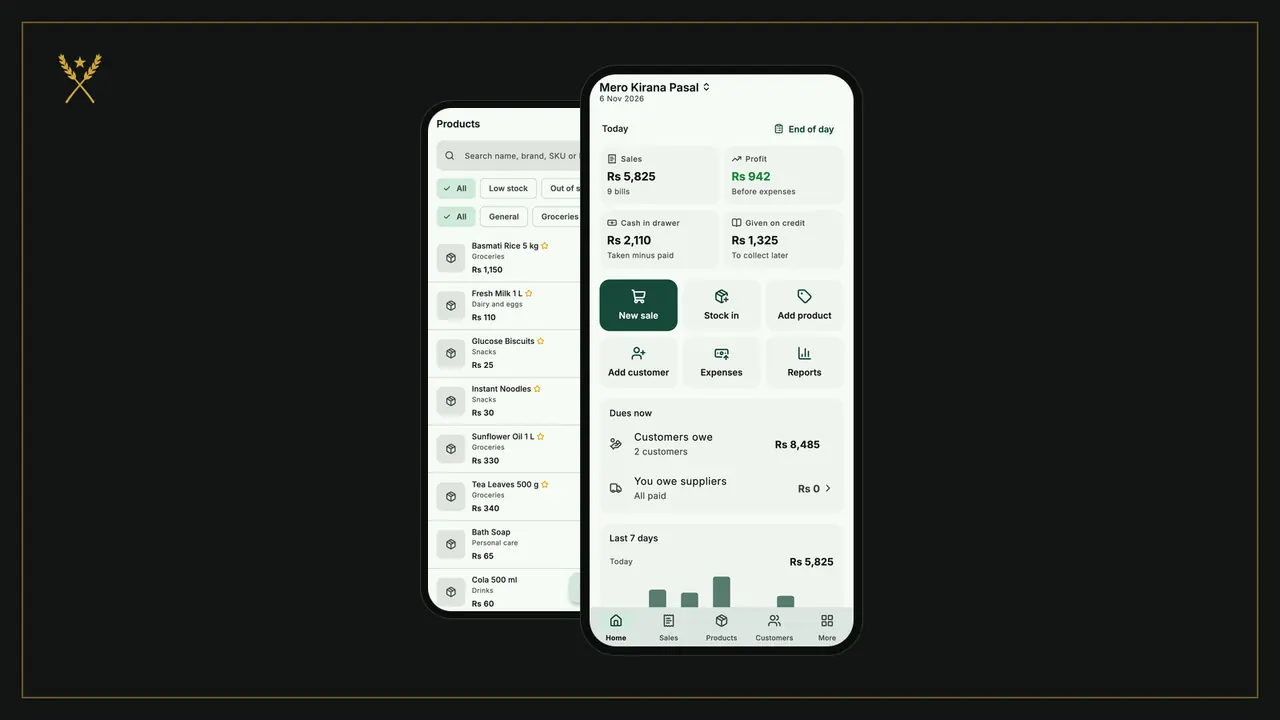
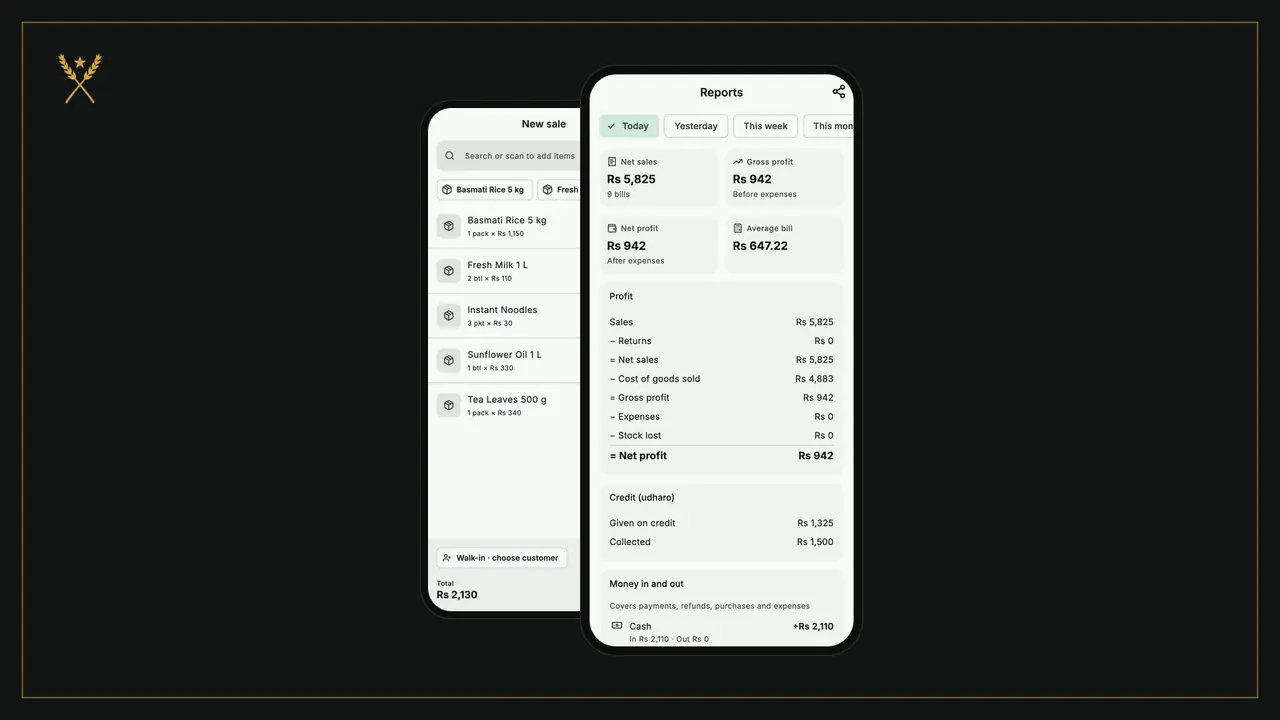
Counting bills and working out the average bill by hand at closing time is tedious, which is why most shops never do it. A billing app counts them for you. In BSMM, a free billing, stock and khata app, the reports show sales, the number of bills, the average bill and best sellers for any day, week or month, from a one-person stall to a shop with several staff and branches. The low-stock list keeps best sellers on the shelf, and each customer's khata shows their bills and payments.
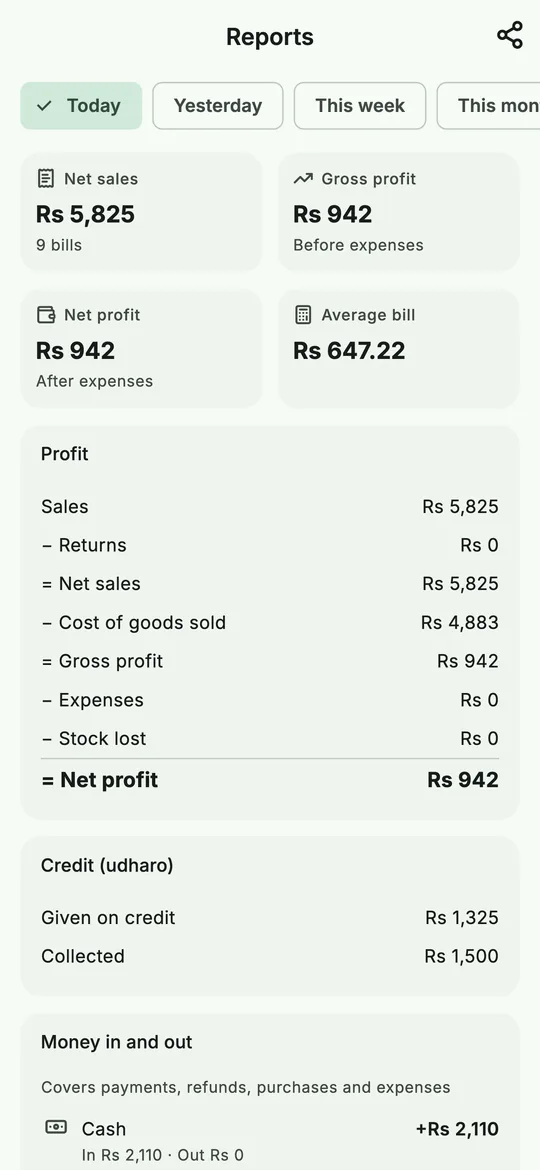 Bills, average bill and profit for any period, counted as you sell.
Questions shopkeepers ask
What's the fastest way to increase sales in a small shop? Usually: never run out of your best sellers, and place related goods together. Both cost almost nothing and work within days.
Do discounts increase sales? They can, but they also cut margin. Use them on slow stock, bundles and introductions, not on what already sells.
How do I attract new customers to my shop? Be visible from the street, list the shop on Google Maps, take orders by phone or WhatsApp, and accept the payments people use. Then keep them with good stock and good service.
Related: how to increase profit in a small shop.