Profit grows in only four ways: sell more, earn more on each sale, spend less to run the shop, or lose less along the way. Many shops chase the first; the other three are often easier and cheaper.
Here are twelve practical ways to increase profit in a small shop, with a worked example of how small changes add up.
First, know where you stand
You can't improve a number you don't know. Work out three figures for last month (a billing app's reports give them without the sums):
- Gross margin: (sales − cost of goods sold) ÷ sales × 100.
- Expenses: rent, electricity, wages, transport, everything it costs to keep the doors open.
- Net profit: gross profit − expenses.
How to calculate your shop's real profit shows the method with an example. Every idea below moves one of these three.
How to increase profit margin: earn more on each sale
1. Buy better. Compare two or three distributors for your top items. A Rs 2 saving on something you sell 300 times a month is Rs 600 a month, with no change at the counter.
2. Pass on price rises promptly. When a supplier raises a price and your shelf price stays the same, the difference comes straight out of your profit. Check margins whenever a new bill arrives.
3. Shift the mix towards better-margin goods. Staples bring customers in; snacks, household and personal-care goods usually earn more per sale. Give the better-margin items good shelf space, near the staples people come for.
4. Price your own goods well. Loose and home-made items are where you set the price. See pricing strategy for a small shop.
Lose less along the way
5. Stop dead stock before it starts. Order from what sold, not from what the salesman says. See dead stock.
6. Rotate stock by expiry date. Every expired packet is a total loss. See FIFO vs FEFO.
7. Count, and find the gaps. Short deliveries, wrong entries and damage that's never written down all eat profit quietly. A regular stock take finds them.
8. Keep udharo under control. Credit that's never repaid is profit you recorded but never received. Limits, settle-up dates and polite reminders keep it small; see digital khata.
Spend less to run the shop
9. Review every expense once a quarter. Electricity for an old fridge, a phone plan nobody uses, transport for half-empty trips. Write each expense down for a month and the waste shows itself.
10. Order less often, in fuller loads, for long-life goods, so you pay transport fewer times. Keep perishables on small, frequent orders.
Sell more, sensibly
11. Never run out of your best sellers. A missing best seller is a lost sale and sometimes a lost customer. Reorder levels prevent it; see reorder level and reorder point.
12. Raise the average bill. Related goods together, a polite suggestion at the counter, bundles. See how to increase sales in a retail store.
How small changes add up
Take a shop with monthly sales of Rs 3,00,000, a 15% gross margin and Rs 30,000 of expenses:
| Before | After small changes | |
|---|---|---|
| Sales | 3,00,000 | 3,09,000 (+3%) |
| Gross margin | 15% | 16% |
| Gross profit | 45,000 | 49,440 |
| Expenses | 30,000 | 28,500 (−5%) |
| Net profit | 15,000 | 20,940 |
Sales up 3%, margin up one point and expenses down 5%: none of these is dramatic, but together they raise net profit by almost 40%. That's why the quiet levers (buying, waste, credit, expenses) matter as much as selling more.
Track it, or it won't happen
Each of these needs a number to watch: margin by item, expired and damaged stock, udharo outstanding, monthly expenses. Keeping them in a notebook is possible but rarely kept up.
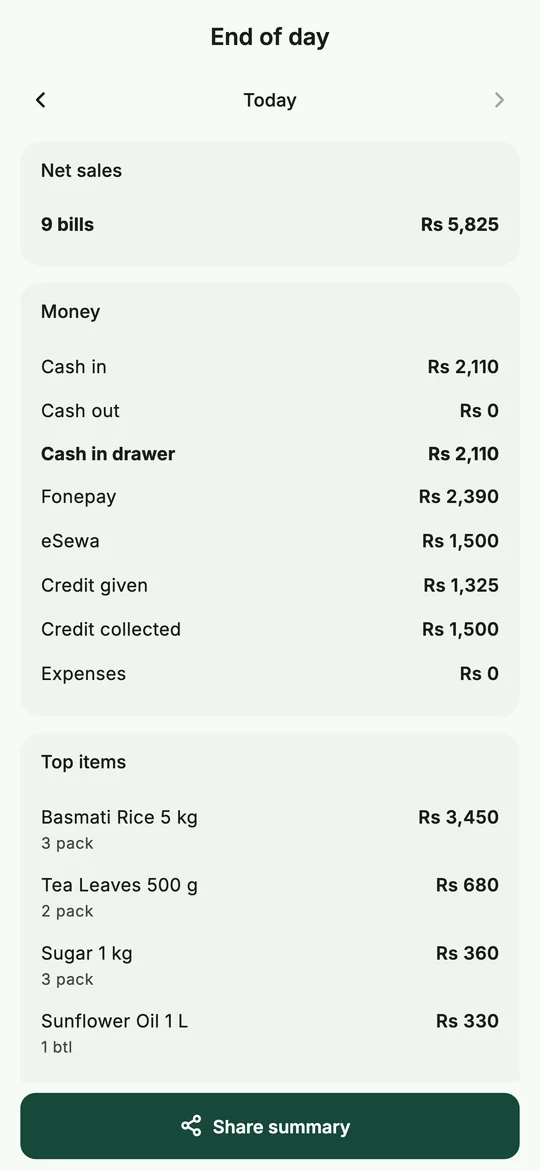 The day's money at closing time: cash, wallets and credit.
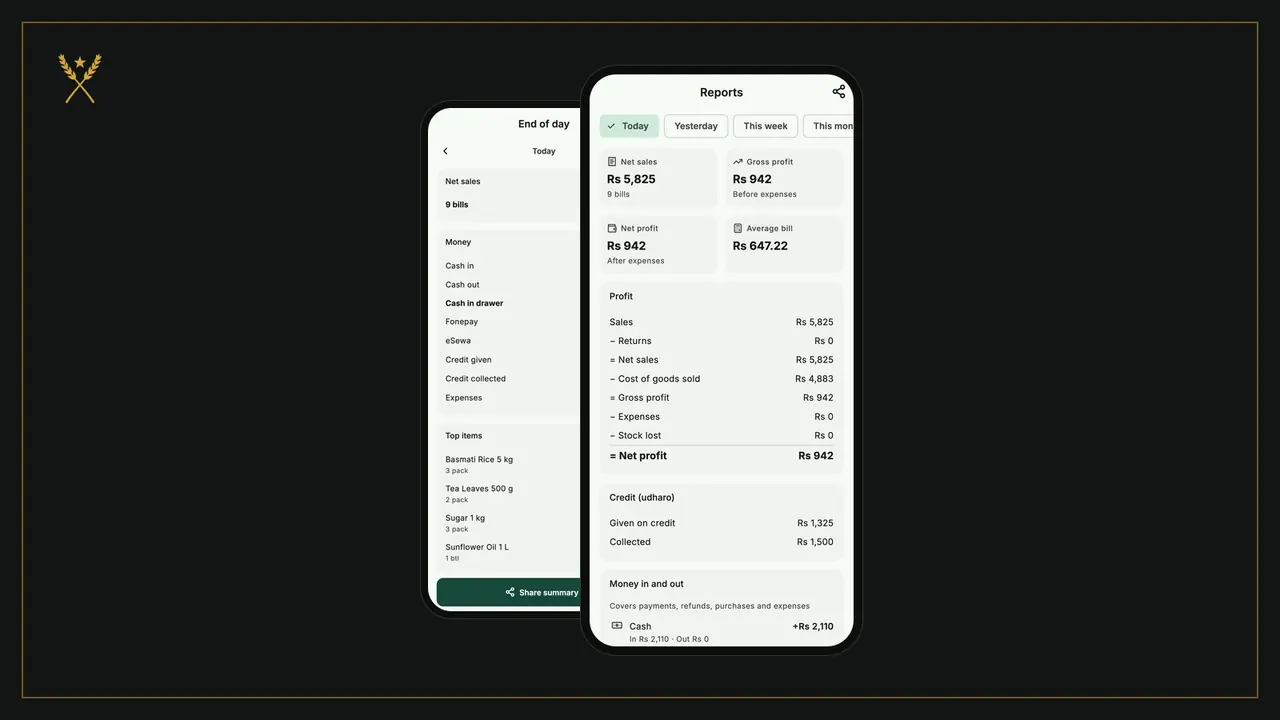
BSMM, a free billing, stock and khata app, keeps them as a side effect of running the counter: average cost and margin for every product, expenses recorded as they're paid, stock losses with their reasons, what customers owe, and profit reports for any period. It works offline and on every staff phone, so the numbers stay complete.
Questions shopkeepers ask
What's the quickest way to increase profit in a shop? Check margins on your 20 best sellers (ABC analysis finds them) against the latest supplier prices. Price rises you didn't pass on are a common hidden profit leak.
How do I increase my profit margin? Buy better (compare distributors for your top items), pass on supplier price rises promptly, give better-margin goods good shelf space, and cut waste from expiry and damage. Each raises what you keep from every sale.
Should I raise prices to increase profit? Sometimes, on items people don't compare closely. On staples customers compare (rice, oil, sugar), raising prices can cost you customers; buying better is the safer lever there.
How much profit should a small shop make? It depends on what it sells and its costs. Track your own net profit monthly and aim to improve it, rather than chasing a general figure.