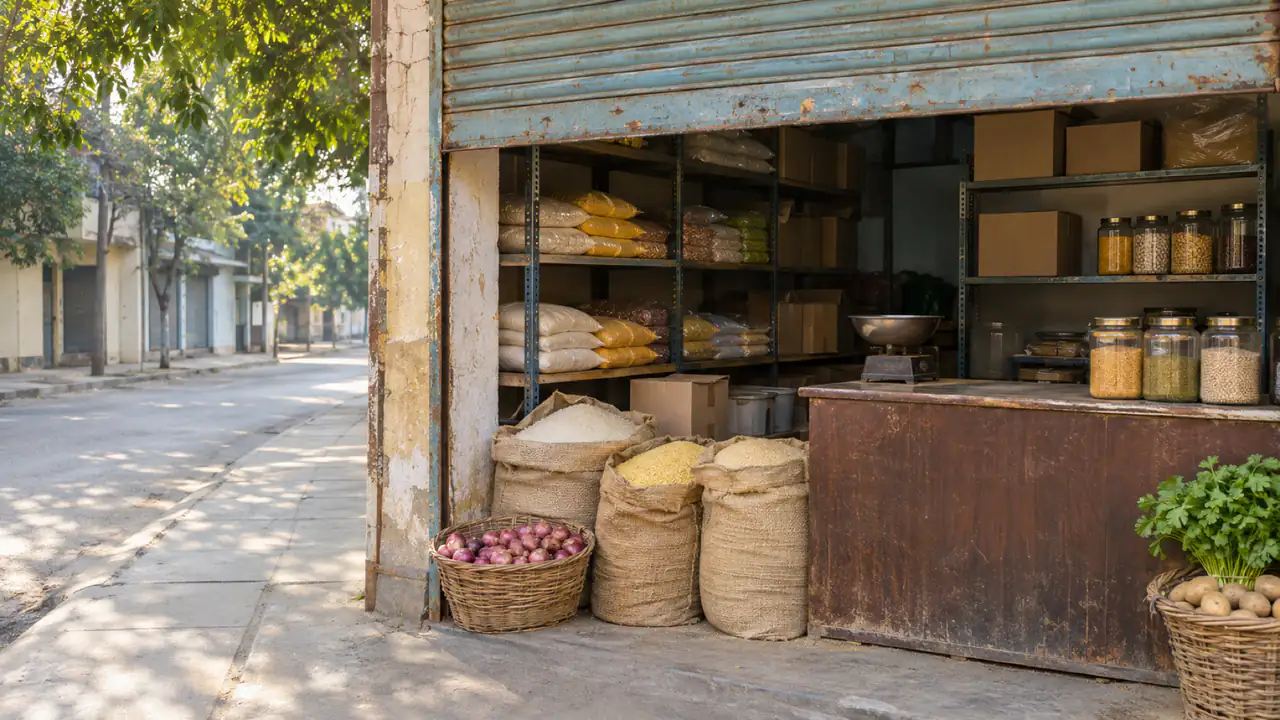
A kirana store (a kirana pasal in Nepal, a general store, a corner shop or a convenience store elsewhere) is one of the oldest small businesses there is: staples, packaged food and household goods, a few steps from people's homes. It's also a business of thin margins and many small decisions, where the shops that last are the ones that know their numbers.
This guide covers how to plan a kirana store, what drives its profit, and a daily routine that keeps it under control. BSMM, the app on this site, was built at one: Bhupu Sainik Mini Mart, a family grocery in Pokhara, Nepal.
What a kirana store sells
Most kirana stores carry three kinds of goods:
- Staples: rice, flour, lentils, sugar, salt, cooking oil, tea. They bring customers in every day; branded staples in particular carry thin margins.
- Packaged goods: biscuits, noodles, snacks, soft drinks, spices. Faster-moving and usually better margins.
- Household and personal care: soap, detergent, shampoo, toothpaste, cleaning goods. Slower, but often better margins.
The mix matters more than any single price. A shop that sells only staples works hard for very little; one with a good share of packaged and household goods earns more on the same footfall.
Before you open
Location. Walk the area at different times of day. Count the homes within a few minutes' walk, and the shops already serving them. A street with many homes and one tired shop beats a busy road with five.
Registration. Rules depend on where you are. In Nepal a shop registers with the local ward office or as a firm (depending on its size and type) and gets a PAN for tax; ask your ward office which applies. In India, shop registration, GST (above the turnover threshold) and food-business registration with FSSAI are common requirements. Check your local office or an accountant before you stock a single shelf.
Suppliers. Find the distributors for the big brands in your area, and a wholesaler for staples. Ask about delivery days, minimum orders, credit terms and whether they take back near-expiry stock.
Opening stock. Start with what every household buys every week, in modest quantities. You'll learn what your street wants within a month; buying deep before you know is how dead stock starts. Keeping records from day one helps: with a free app such as BSMM, the first month's bills already show what to reorder.
A one-page business plan
You don't need a long document. One page with these numbers is enough to see whether the shop can work:
- Starting costs: rent deposit, shelving, a fridge, scales, signage, registration and the opening stock.
- Monthly fixed costs: rent, electricity, staff, transport, phone and internet, and a wage for yourself.
- Your average gross margin: what you keep from each Rs 100 of sales after the cost of the goods. Work it out from real prices; see how to calculate your shop's real profit.
- Break-even sales: monthly fixed costs ÷ gross margin.
An example, with made-up numbers: if your fixed costs are Rs 30,000 a month and your average gross margin is 15%, you need sales of 30,000 ÷ 0.15 = Rs 2,00,000 a month, or about Rs 6,700 a day, before the shop makes a rupee of profit. If that number looks far from what the street can buy, rethink the rent, the costs or the product mix before you open.
Kirana store profit margins, worked out
Margins differ by item, so work them out from your own buying and selling prices. Three made-up examples:
| Item | You pay | You sell at | Profit | Margin |
|---|---|---|---|---|
| Branded cooking oil, 1 L | Rs 92 | Rs 100 (printed price) | Rs 8 | 8% |
| Biscuits, a pack | Rs 17 | Rs 20 | Rs 3 | 15% |
| Detergent, 1 kg | Rs 160 | Rs 200 | Rs 40 | 20% |
Margin = profit ÷ selling price × 100. Your shop's overall margin is the mix of all of these, weighted by how much of each you sell, which is why the product mix matters so much.
What decides a kirana store's profit
- The product mix. Staples on thin margins, packaged and household goods on better ones.
- Buying. Small price differences between suppliers add up across hundreds of items.
- Waste. Expired, damaged and dead stock is lost profit. See FIFO vs FEFO and dead stock.
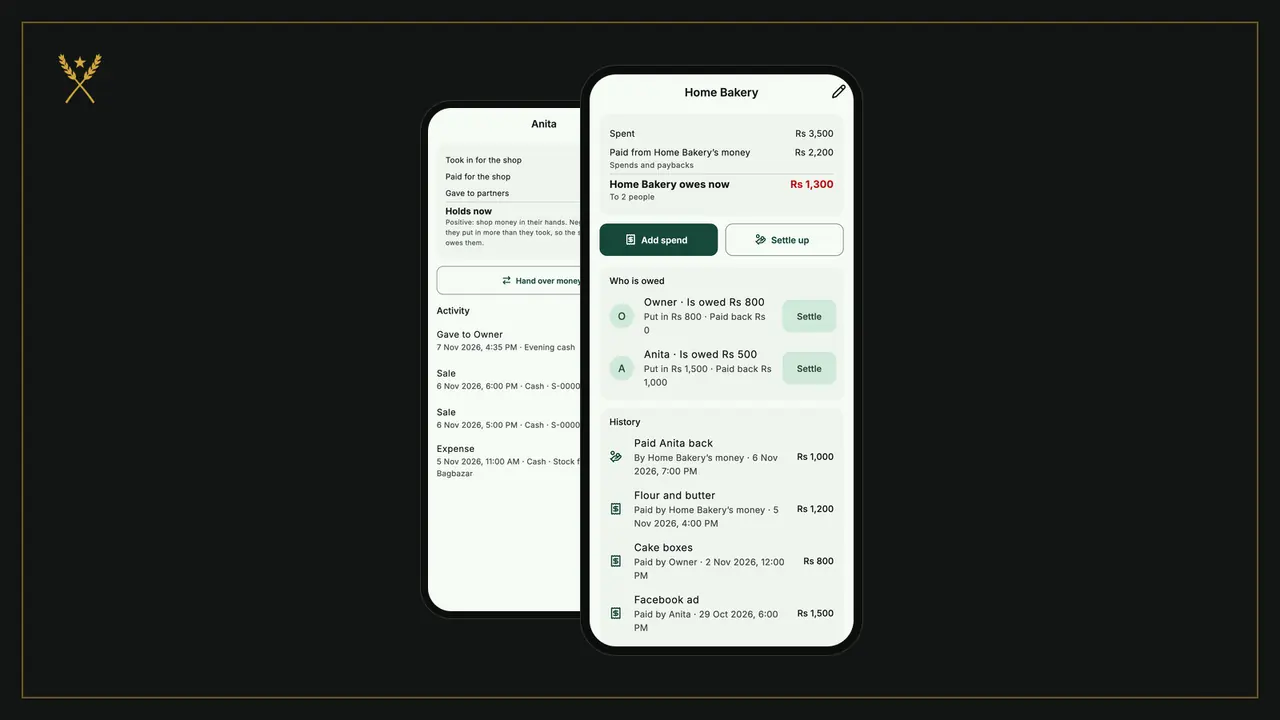
- Credit. Udharo keeps customers loyal, but money that never comes back is a loss. See managing udharo with a digital khata.
- Running out. Every "we don't have it today" sends a customer to the next shop.
Retail store management: a daily routine
Opening
- Count the cash float in the drawer.
- Check fresh goods: milk, bread, eggs. Move earlier dates to the front.
- Receive deliveries: check them against the bill before signing, and record them.
At the counter
- Bill every sale, item by item, even the small ones.
- Put credit on the customer's account the moment you give it.
- Note anything customers asked for that you didn't have.
Closing
- Count the cash and compare it with the day's cash sales.
- Look at the low-stock list and place tomorrow's orders.
- Glance at the day's sales and profit.
Every week and every month
- Weekly: count your best sellers, check the dairy and snack dates, send polite reminders for overdue udharo.
- Monthly: add up expenses and work out net profit; look at slow movers; compare supplier prices for your top items.
- Yearly: a full stock take.
Ways to grow
- Phone and WhatsApp orders with home delivery for regulars.
- QR and wallet payments, so customers without cash still buy.
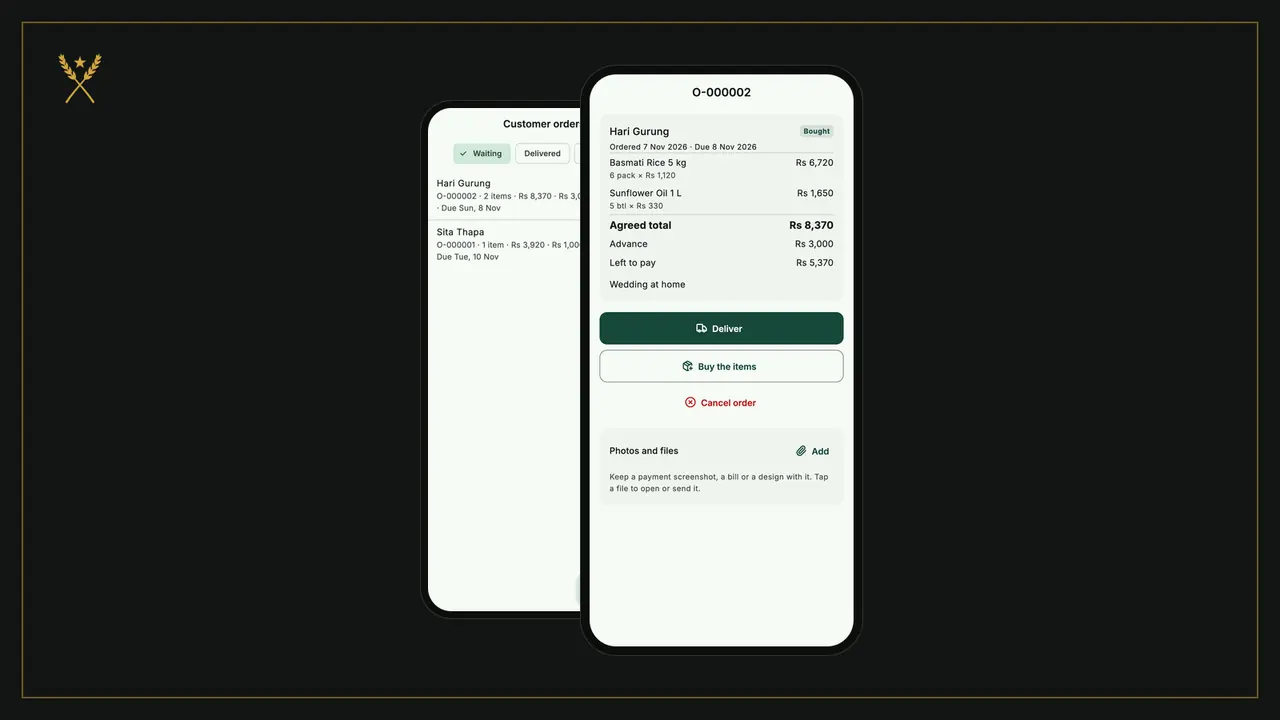
- Customer orders with an advance, for anything you don't usually stock.
- Better shelf space for your best earners: an ABC analysis shows which ones.
Running it from your phone
BSMM is a free billing, stock and khata app made at a kirana in Pokhara, for shops anywhere. It handles the routine above from one phone: billing with barcode scanning, stock that updates itself, deliveries with expiry dates, a khata for every regular, customer orders with an advance, low-stock and reorder lists, and a day-end summary of cash, wallets and credit. It works offline, your staff use their own phones, and it's free, with no paid plan or ads.
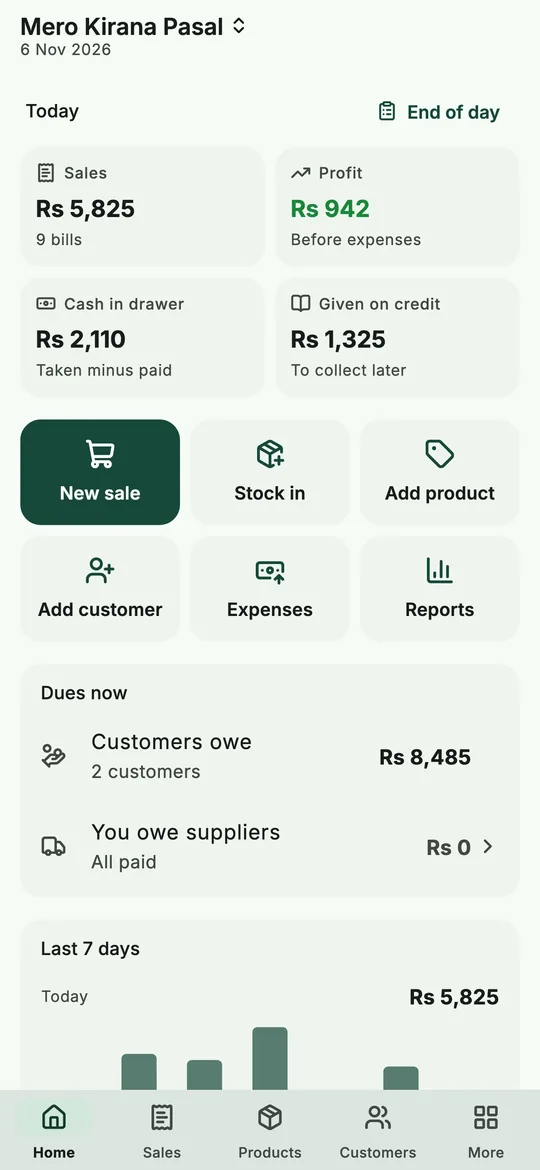 A kirana's day at a glance, the moment the app opens.
Questions shopkeepers ask
How much money do I need to open a kirana store? It depends on the town, the size and how much stock you start with. List your own figures for each line (rent deposit, shelves, a fridge, scales, registration, opening stock and a few months of running costs); the opening stock is usually the biggest. A small shop that starts lean and adds stock as it learns what sells needs less up front.
How much profit does a kirana store make? It depends on sales, the product mix and costs, so there's no honest single number. Work out your own margin from your prices, and your break-even sales from your costs, as above.
What's the profit margin on kirana items? Staples like rice, sugar and oil usually carry the thinnest margins; packaged snacks, cosmetics and household goods usually carry more. Your own records, item by item, are the only reliable figure.
Is a kirana store a good business? It's steady when the location is right, costs are controlled and the owner knows the numbers. It rarely makes anyone rich quickly, and it rewards the shops that waste the least.